“Photography is knowing where to stand” – Ansel Adams
In this post, I want to discuss the technicalities as well as the practicalities of finding your shot. This mission of “finding the shot” boils down to one simple rule that photographers have followed since the beginning of the craft: knowing where to stand.
As easy and self-explanatory as it might sound, there are an abundance of tools and tricks I use everyday to better understand and “find” my shot. These are broken down into two categories: Context and Light.
CONTEXT:
Sounds simple enough, doesn’t it? Context should be your highest motivator when going to shoot photography. Personally, it is one of the first things I think about before even picking up the camera.
So what do I mean by context? And how can you use it to your advantage when shooting? Well, when shooting free-lance, it’s important to understand the conditions in which you will be shooting to ensure you bring the right equipment and shoot for the respective vibe. What do I mean by this? I mean that if I am preparing to shoot a portrait, I want to be made aware of all information that can make it easier for me to centralize a feeling I want to convey through my shot. For instance, if I am shooting a dark-haired model, dressed in all black, shooting behind a cemetery, this gives me ample information to identify what methods I want to use to shoot. These contextual clues are used throughout the shoot to ensure your spectrum of photo’s retains a central consciousness. Of course, the shooting/lighting/equipment methods you are going to use are going to vary extremely from shoot to shoot given one thing: Context.
One important thing to remember is that Context is NOT Composition. Context is the understanding of who/what/when/why details of what your image is for. Composition is the actual constructive formation of your photo, what it includes, and where those things are in the photo.
Light:
Light, light, and more light. This is a photographers weapon of choice. Light is what we can use to convey every single type of feeling imaginable, and is used in harmony with context to ensure your vision is made a reality. Light that you will frequently use is going to be broken down to natural and manufactured light. Keeping your context in mind, you will use one or the other, or a combination of both to achieve the look you want. Experimentation is a key part of learning just what light can do for your photos, so be sure to go out and practice! To teach you more about just how light works I have attached this very useful three minute video!- https://www.youtube.com/watch?v=EJWNQv01VtI
Using the three rules of this video to understand just how light works, you can begin to test these methods through natural and manufactured light.
Here is an example of a quick and easy way that I used context and light to deliver a message through my photo.
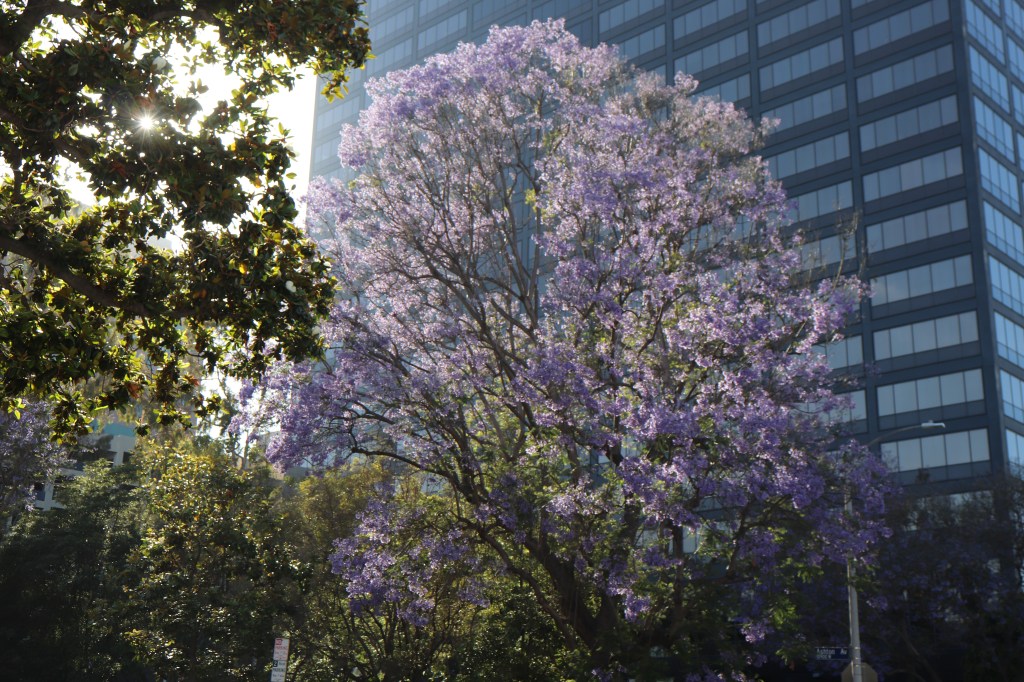
The above photo was taken for a series highlighting the different plants and trees that can be found in downtown Los Angeles. The context of the portfolio was to create an uplifting feeling of discovering beautiful scenery in a place crowded by traffic and buildings. Given this context, I shot the above tree with plenty of building and infrastructure in the background, but the essential piece of the photo is of course, the tree. I used the natural light of the sunset in the background to further illuminate that feeling of nature and beauty. Given this example, one can imagine how the same light in the photo can be used to deliver different messages. Context and Light are our tools for writing this message.
 JCC PHOTOGRAPHY